
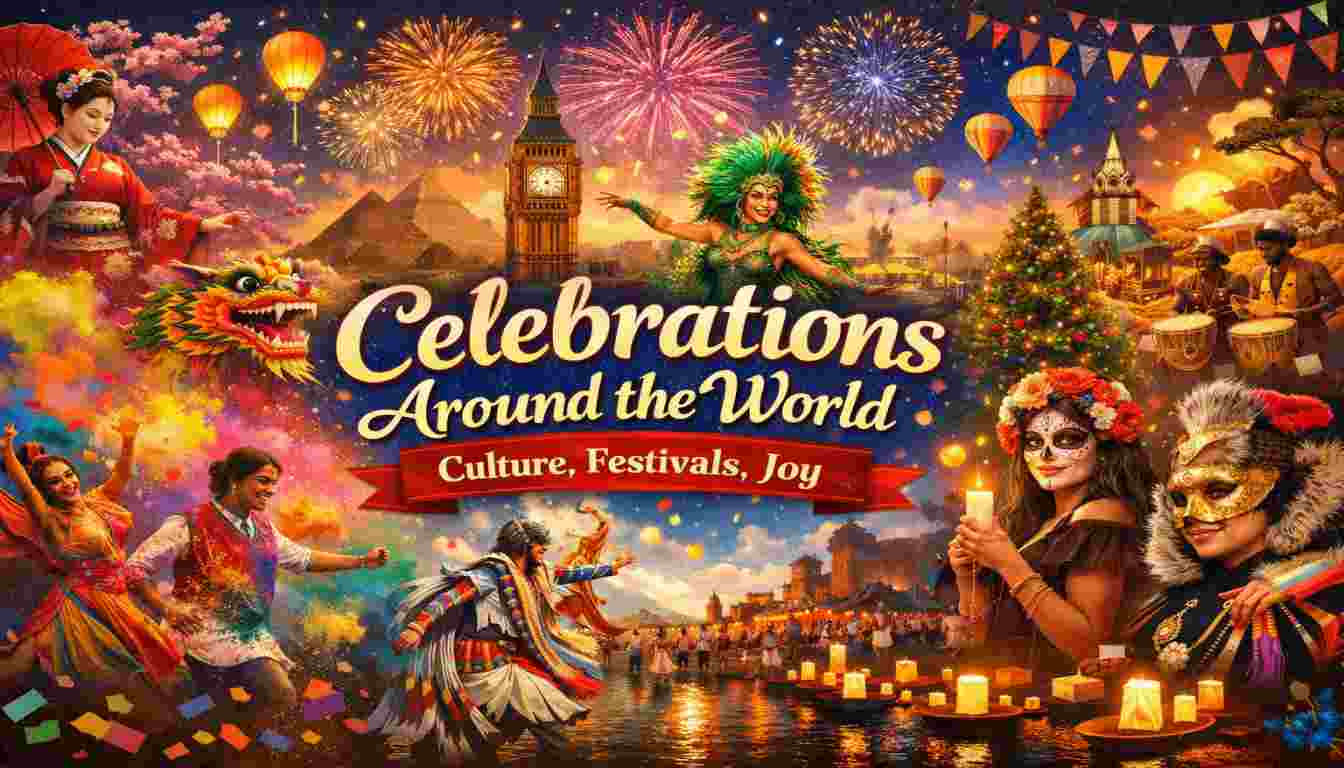
Celebrations Around the World: Culture, Festivals, Joy
Introduction to Celebrations Around the World
Celebrations around the world show how people express joy, culture, and tradition. Every country has its own festivals and holidays. These celebrations bring people together and create happy memories. They are often linked with history, religion, or seasonal changes. Some celebrations are very old and have been practiced for hundreds of years. Others are newer but still meaningful. People celebrate with music, food, dance, and special events. These traditions help communities stay connected.
When we learn about celebrations around the world, we understand how different cultures live and share happiness. Even though traditions may be different, the feeling of celebration is the same everywhere. Celebrations also teach younger generations about their culture. Families pass traditions from parents to children. This keeps cultural identity strong and alive.
Why Celebrations Are Important in Different Cultures
Celebrations play an important role in every culture. They help people remember important events in history, religion, and society. One key reason celebrations matter is that they bring communities together. During festivals, families and friends gather to enjoy time with each other. This strengthens relationships and creates unity. Another important reason is that celebrations protect cultural traditions. Many customs, dances, and foods are only practiced during festivals. Without these events, some traditions might disappear.
Celebrations also give people a chance to relax and enjoy life. Work and daily stress can be tiring. Festivals allow people to take a break and enjoy happiness. Most importantly, celebrations help people feel proud of their culture and identity.
How Different Countries Celebrate Special Occasions
Different countries celebrate special occasions in unique ways. These traditions depend on culture, religion, and local history. In some countries, celebrations include large street parades and fireworks. In others, people celebrate quietly with family gatherings and traditional meals.
For example, many countries celebrate with colorful decorations, music, and dancing. These elements make the event lively and exciting. Clothing is also an important part of celebrations. People often wear traditional dress that represents their culture. This makes festivals more meaningful. Although the styles may be different, the goal of every celebration is the same. People want to share joy and celebrate important moments together.
Most Popular Celebrations Around the World
Many festivals are famous worldwide. These celebrations attract millions of people every year. One well-known celebration is New Year’s Eve. It is celebrated in many countries with fireworks and parties. People welcome the new year with hope and happiness. Another popular celebration is Christmas. It is observed in many parts of the world. Families exchange gifts, decorate trees, and share special meals. Diwali, the festival of lights, is also widely celebrated. It symbolizes the victory of light over darkness. Another global celebration is Halloween. People wear costumes, decorate houses, and enjoy fun activities. These festivals show how people across the world share similar feelings of joy and celebration.
New Year Celebrations Across Different Countries
The New Year is one of the biggest celebrations worldwide. Each country welcomes the new year in its own special way. Many cities celebrate with large fireworks displays. Crowds gather in public places to watch the sky light up at midnight. In some cultures, families share a special meal on New Year’s Eve. This meal represents luck, prosperity, and happiness for the coming year. Some traditions include making promises for the new year. These promises are often called New Year resolutions. New Year celebrations remind people that a fresh start is always possible. It is a time to look forward with hope.
Religious Celebrations Around the World
Religion plays a major role in many celebrations. Religious festivals often have deep spiritual meaning. For example, Eid is celebrated by Muslims after the month of fasting. Families gather for prayers and share meals with loved ones. Christmas is an important celebration for Christians. It marks the birth of Jesus Christ and focuses on peace and kindness. Vesak is celebrated by Buddhists to honor the birth and teachings of Buddha. These religious celebrations encourage faith, charity, and compassion. They remind people to care for others and live with kindness.
Cultural Festivals That Attract Global Tourists
Many cultural festivals attract tourists from around the world. These events offer a chance to experience unique traditions and entertainment. One example is the Rio Carnival in Brazil. It is famous for its colorful parades, samba music, and energetic dancing. Another famous event is Oktoberfest in Germany. This festival celebrates traditional food, music, and cultural pride. Festivals like these help visitors learn about different cultures. They also provide unforgettable experiences. Tourists enjoy watching traditional performances, tasting local food, and exploring cultural activities.
Also Read: xierzugicoz2005 The Complete Guide to Its Meaning Impact and Growing Relevance in Malaysia
Unique and Unusual Celebrations Around the World
Some celebrations are very unique and surprising. They show how creative and diverse cultures can be. In some places, festivals include unusual competitions or games. These activities make celebrations fun and memorable. For example, certain festivals include food fights, street performances, and creative costumes. These events attract large crowds and media attention. Although these celebrations may seem unusual, they are important parts of local culture. They remind us that celebrations can be both meaningful and entertaining.
Traditional Foods and Customs in Global Celebrations
Food plays an important role in celebrations. Special dishes are often prepared only during festivals. These foods carry deep cultural meaning. They may represent good luck, happiness, or prosperity. Families often spend time cooking together before celebrations. This activity brings everyone closer. In many cultures, sharing food is a symbol of friendship and generosity. Traditional customs are also important. These may include prayers, dances, music, or storytelling. Together, food and customs make celebrations more special and memorable.
How Celebrations Reflect Culture and Heritage
Celebrations reflect the values and history of a society. They show how people honor their past and traditions. Many festivals include traditional music, dance, and art. These elements represent the heritage of a community. By celebrating these traditions, people keep their culture alive. Celebrations also teach young people about their roots. They learn about the customs and beliefs of their ancestors. This helps maintain a strong connection between generations.
Modern Changes in Celebrations Around the World
Over time, celebrations change. Modern technology and social trends influence how festivals are celebrated. Today many celebrations include social media, digital invitations, and online events. People also share photos and videos of festivals with friends around the world. Some traditions remain the same, while others evolve with time. These changes make celebrations more accessible and global.
How Globalization Is Influencing International Celebrations
Globalization has made it easier for cultures to connect. As a result, many celebrations are now known worldwide. For example, festivals like Halloween and Valentine’s Day are now celebrated in many different countries. This exchange of traditions creates cultural understanding and shared experiences. However, some communities also work to protect their traditional celebrations. They want to ensure that their unique culture remains strong.
Tips for Experiencing Celebrations Around the World as a Traveler
Travelers who want to experience global festivals should plan carefully. First, research the festival and its traditions. Understanding the meaning of the event helps visitors appreciate it more. Second, respect local customs and dress appropriately. It is also helpful to try traditional foods and cultural activities during the celebration. Travelers should also arrive early because festivals can be very crowded. Experiencing celebrations in different countries can create lifelong memories.
The Economic and Tourism Impact of Global Celebrations
Celebrations also have a strong economic impact. Festivals attract visitors from many parts of the world. Tourists spend money on hotels, food, transportation, and souvenirs. This helps local businesses grow and creates jobs for the community. Many cities depend on major festivals for tourism income. Because of this, governments and organizations support these events. Celebrations therefore help both culture and economic development.
Conclusion: The Beauty of Celebrations Around the World
In every corner of the world, people celebrate important moments in life. These celebrations reflect culture, faith, and history. Although traditions may be different, the purpose of celebration is the same everywhere. People want to share happiness with family and friends. Learning about celebrations around the world helps us appreciate cultural diversity. It teaches respect and understanding between different communities.
Festivals also remind us that joy and unity are universal human experiences. By celebrating together, people create memories that last a lifetime.